
Build Up Boys Founder Kimmi Berlin’s story
When I was pregnant and found out I was having a boy, I freaked out. I had had complicated relationships with men; there always seemed to be a disconnection, a seemingly impossible chasm to cross. I worried that my son and I wouldn’t connect, that I would feel forever on the outside of our relationship.
But when he arrived, my son was, above anything else, a human being who knew how to love and be loved. He wasn’t guarded. He wasn’t shut down. He wasn’t cruel. He was just himself: whole and beautiful.
I shouldn’t have been so surprised. Psychologists and researchers have found that boys don’t start out disconnected from their feelings or lacking a capacity for closeness. It is something they learn.
I didn’t want my son to learn this, but when he was three years old, he came home from preschool and told us that his teacher said, “I like you better when you don’t cry.”
My husband and I were both seething, but decided our concerns might have more impact coming from him, as a man, so at drop-off the next morning, he very calmly called her out on her comment.
“As a comedy writer,” he said, “I’ve used humor to deflect uncomfortable feelings, and that’s really hurt me and my relationships. We don’t want that for our son. We want him to inhabit and express the full range of his emotions, to stay connected to himself and others.”
She looked at him sideways, as if to say, Okay, little snowflake, good luck with that.
Her reaction was baffling at first. Why would she think encouraging a three-year-old boy not to cry would be a good thing?
But then I got it. She wasn’t trying to hurt our son. She was trying to protect him.
She was someone, like me, like you, who had so completely absorbed cultural norms and expectations that she was going to pass them onto our son, as simply just the way things are: “Boys don't cry,” and the ones who do are sissies or some other pejorative, or worst case, targets.
Because for boys, before some of them even know how to read, they start to trade pieces of their humanity for social currency. They learn that vulnerability has a price, and that toughness is the cost of acceptance.
It was the first time I realized how early we start asking boys to give up who they are to fit in.
I immediately started searching for social-emotional learning programs designed specifically for boys. Something that could help my son hold onto his whole self. The part of him that cried at the thought of worms being eaten by robins. The part that could take one look at my face and know something was wrong. The part that could identify his feelings in his body and express them with no self-consciousness: “Mom, I’m feeling nervous in my eyeballs.” The part of him that always asked for an extra lollipop at the barbershop. Not for himself, but for his sister.
I didn’t need someone to fix him. I needed someone to help protect what was there before people like his “helpful” teacher tried to shut down the very things that made him human.
All of the programs I found were for older boys or men, focused on correcting unwanted behavior and preventing harm. The message underneath was familiar: boys will be boys, biology is destiny, and the best we can do is manage the damage. I kept thinking: why are we waiting until something goes wrong?
I wanted to do something about it, so I founded Build Up Boys, a nonprofit that equips young boys with the skills they need to retain their innate emotional intelligence.
Here’s to creating a better boyhood for a safer world,
Kimmi
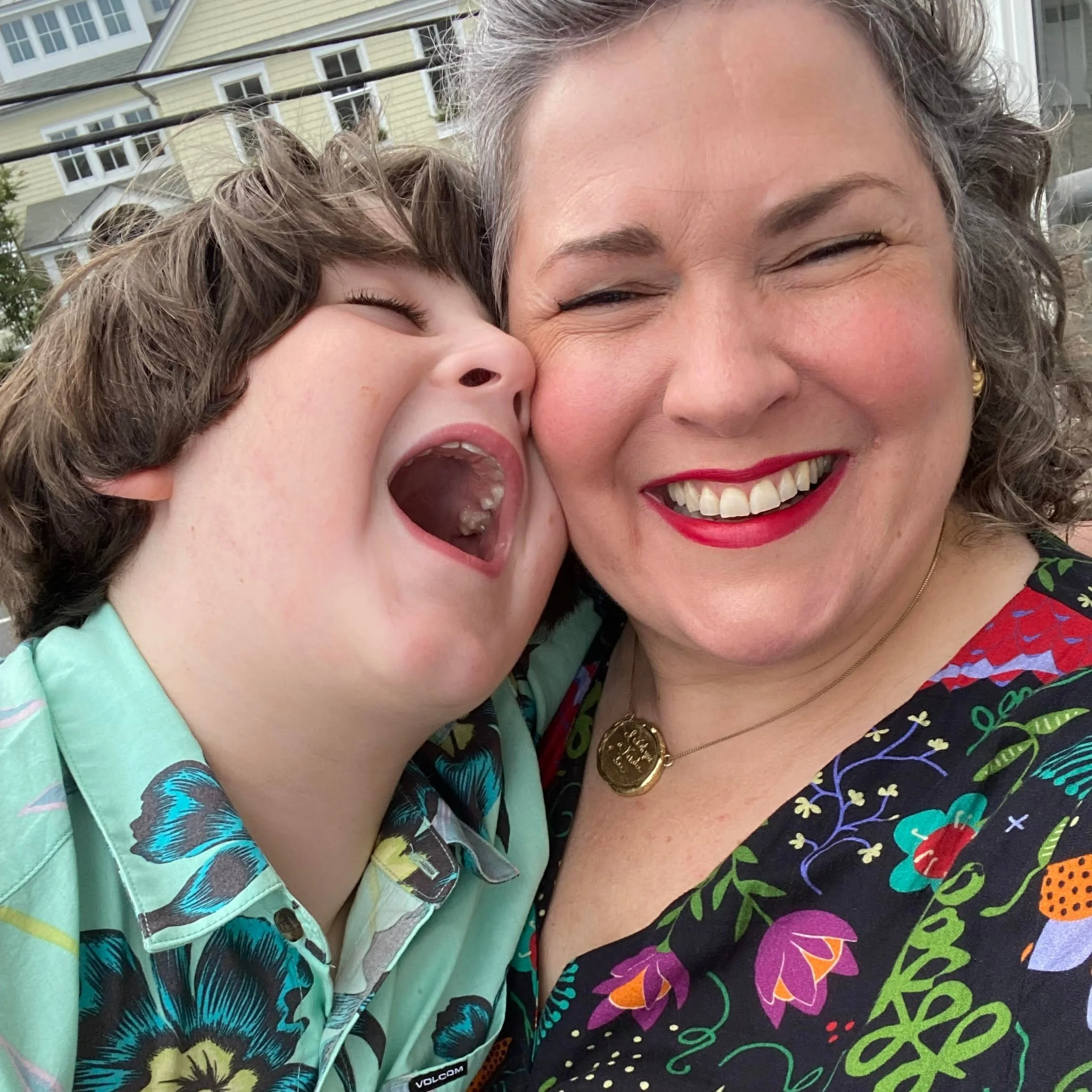
Me & my son